
Start with the operating model
A loan management system should support the way your lending teams work across onboarding, underwriting, disbursement, repayment, collections and reporting. Document the current process, future products and expected transaction volumes before comparing vendors.
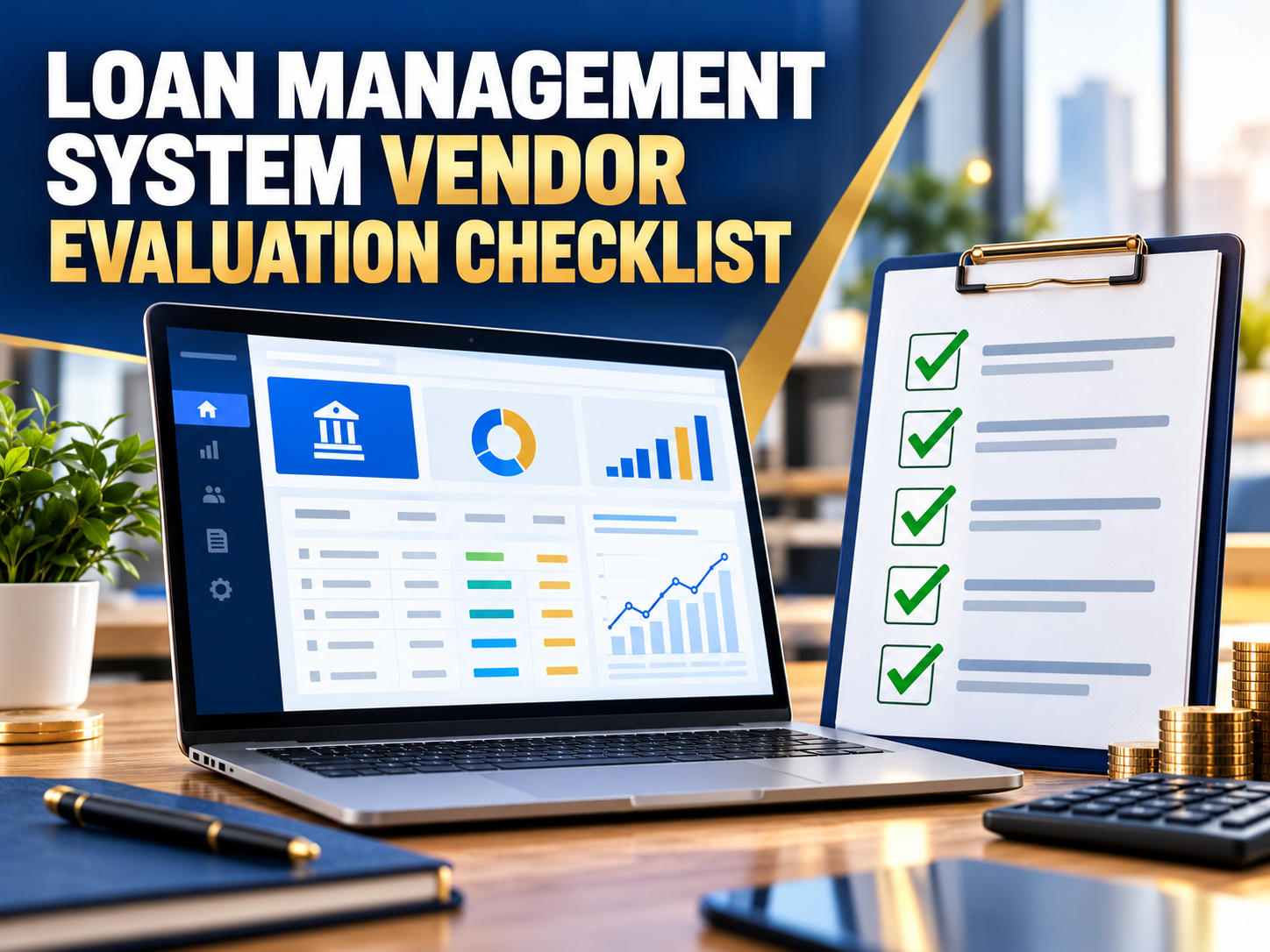
Vendor evaluation checklist
- Configurable loan products, repayment rules and approval workflows
- Customer, account, document and collection management
- APIs for payments, identity, credit bureaus and accounting systems
- Role-based access, audit trails, encryption and backup controls
- Mobile access and practical tools for field teams
- Reporting, portfolio visibility and exportable operational data
- Implementation approach, support model and upgrade process
Validate before committing
Ask shortlisted vendors to demonstrate your real scenarios using representative data. A structured proof of concept reveals workflow gaps and integration risks more clearly than a generic product presentation.
Build a cross-functional evaluation team
Include representatives from lending operations, collections, finance, risk, compliance, information security and technology. Each group should document mandatory requirements, acceptable workarounds and future capabilities before product demonstrations begin.
A practical scoring framework
Use a weighted scorecard instead of selecting a platform from feature count alone. Evaluate business fit, user experience, integration readiness, data ownership, security, implementation risk, support and total operating cost. Record evidence from demonstrations and reference discussions beside every score.
Questions to ask each vendor
- Which workflows can business administrators configure without code?
- How are rate changes, charges, schedules and reversals controlled?
- What audit history is available for user and system activity?
- How are APIs authenticated, monitored and versioned?
- What happens when payment or third-party services are temporarily unavailable?
- How will existing customer, loan and transaction data be validated during migration?
- Which implementation responsibilities belong to the vendor and which remain with the buyer?
Calculate the complete cost
Compare licensing with implementation, migration, integration, infrastructure, training, support and future change costs. A lower initial quote may not represent the best long-term value if every product change requires custom development.
Run a scenario-based proof of concept
Test representative journeys such as a new loan, partial payment, failed mandate, overdue account, restructuring, closure and audit review. Confirm expected calculations and reports with business owners before final selection.